
Arizona’s Semiconductor Surge: Powering a North American Tech Revolution

Arizona’s Semiconductor Surge: Powering a North American Tech Revolution

Arizona’s Semiconductor Surge: Powering a North American Tech Revolution

You may not realize it, but every device you touch—your smartphone, car, or morning coffee maker—runs on a tiny chip. These silicon marvels fuel the semiconductor industry, and as someone who has lived in Arizona for six years, I’ve witnessed our state’s transformation from a desert of promise into a global semiconductor hub. When I arrived in 2019, I saw a community brimming with potential. Today, Arizona is the cornerstone of a North American mega-region, driving unparalleled growth in the semiconductor industry and creating transformative high-tech jobs that uplift Arizonans and strengthen our continent’s technological leadership.
Arizona’s ascent in the semiconductor industry is nothing short of remarkable. Our economy is booming, outpacing national growth, driven by technology. Since 2020, Arizona has secured over 50 semiconductor expansions, attracting $205 billion in capital investment and creating 25,000 high-tech jobs. TSMC’s monumental $165 billion commitment to Phoenix, including a $100 billion expansion for three new fabrication plants, two advanced packaging facilities, and a cutting-edge R&D center, is reshaping our communities. Intel’s $20 billion investment in new Chandler fabs adds momentum to this transformation. These investments are more than numbers; they’re a lifeline for Arizona families, funding new schools, revitalizing neighborhoods, and boosting local businesses, from family-owned restaurants to construction firms. TSMC projects 12,000 direct, high-paying jobs and 40,000 construction roles by 2029.
Meanwhile, 39 related companies have relocated to Phoenix, bringing 7,700 jobs and $37 billion in capital investment. This “halo effect” is creating a ripple of prosperity across Arizona, making our state a beacon of opportunity. Arizona State University, with the nation’s #1 undergraduate engineering program, is training the next generation of innovators. The state’s selection for the National Semiconductor Technology Center’s Prototyping and National Advanced Packaging Manufacturing Program facility solidifies Arizona’s leadership in the semiconductor industry.
While Arizona is the heart of this revolution, our neighbors in Mexico and Canada amplify its impact. The global semiconductor industry faces a critical shortage of 1 million skilled workers by 2030, and Mexico’s 83,000 annual engineering graduates in fields like electronics and industrial engineering, along with 400,000 workers in cities like Tijuana and Hermosillo, offer a cost-competitive workforce at $4.58/hour compared to China’s $5.05/hour. The USMCA trade agreement’s tariff-free benefits and proximity make Mexico a vital partner for chip assembly, testing, and packaging, complementing Arizona’s high-tech fabs. This collaboration creates high-wage jobs in northern Mexico, mirroring Arizona’s economic surge, while Canada’s research strengths enhance our innovation ecosystem. Together, we’re building a North American mega-region that reduces reliance on China’s 31% share of global semiconductor production.
The global semiconductor industry is poised to reach a $1 trillion valuation by 2030, with an annual growth rate of 7-9% projected after 2025. The U.S. CHIPS and Science Act, with $52.7 billion in funding—including $39 billion for manufacturing incentives—has catalyzed $160-$200 billion in projected investments and 25,000-45,000 new jobs nationwide, with Arizona at the forefront. To cement this North American mega-region, we need bold action:

1. Semiconductor Skills Pact: A USMCA trade initiative to standardize training and apprenticeships, enabling seamless cross-border talent mobility. The 884% surge in TN Visas since 2010 demonstrates its feasibility.

2. Fee-Free Supply Chains: A trilateral task force to eliminate tariffs on materials like silicon wafers, boosting semiconductor industry efficiency.

3. Innovation Hubs: Connect universities across the U.S., Mexico, and Canada, leveraging Arizona State University’s top-tier engineering program to challenge China’s 55% share of global semiconductor patents.

4. Sustainable Infrastructure: Develop shared energy grids and water reclamation systems, like TSMC’s 90% water recycling model, for eco-friendly growth across the North American mega-region.

Professionals across North America imagine shaping the future in Arizona’s semiconductor industry, where innovation meets opportunity. Krear Consultancy is here to guide you, leveraging our expertise in U.S.-Mexico connections to fuel this revolution. For Arizona, it’s high-tech jobs, thriving communities, and global leadership. For northern Mexico, it’s economic empowerment. Pair this vision with an image of a vibrant semiconductor fab to spark inspiration.

Modernizing the Mexico-U.S. Border: A Strategic Leap for Trade and Mobility

Modernizing the Mexico-U.S. Border: A Strategic Leap for Trade and Mobility

Modernizing the Mexico-U.S. Border: A Strategic Leap for Trade and Mobility

Modernizing the Mexico-U.S. The recent Plenary Meeting of the Mexico-U.S. Binational Group on Bridges and Border Crossings, hosted at Mexico’s Secretariat of Foreign Affairs (SRE), represents more than a diplomatic event—it’s a step toward a smarter, more connected future for the region. With over 400 stakeholders present both in person and online, this gathering shows a renewed and human-centered vision to improve cross-border infrastructure, mobility, and economic flow.
As Roberto Velasco Álvarez, Chief of the North America Unit at the SRE, pointed out, it’s the first meeting of its kind under the new administrations—a fresh opportunity to align shared goals and streamline critical logistics. The Mexico-U.S. border isn’t just a line on a map; it’s a living artery supporting the largest bilateral trade partnership in the world. Modernizing it is not just strategic—it’s essential.
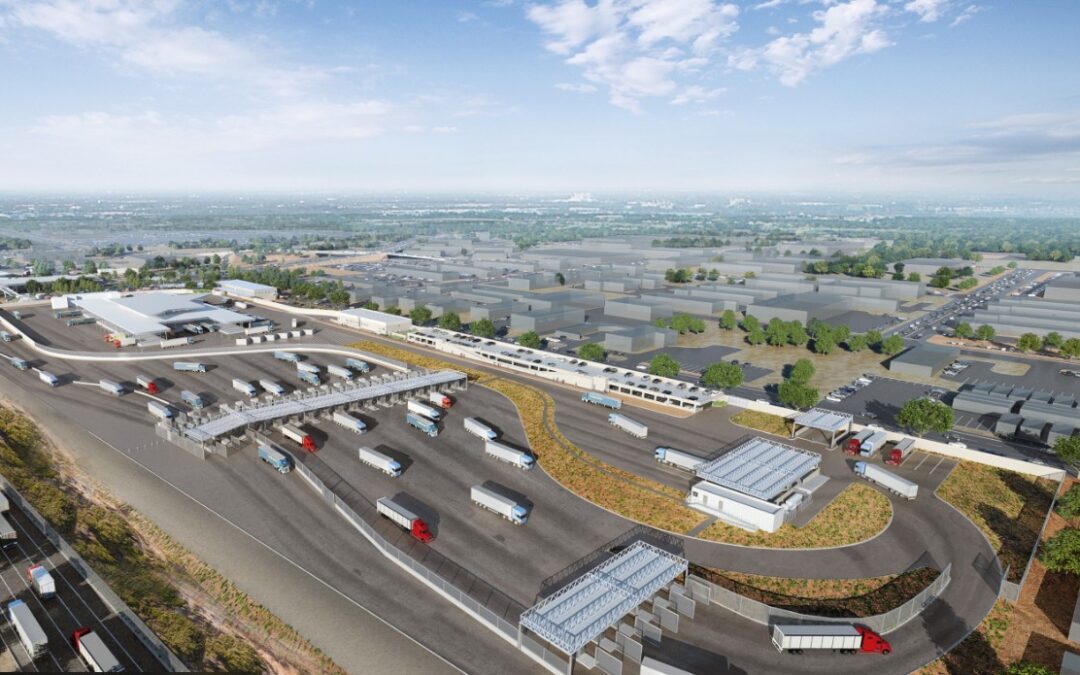
Strategic Advances: What Was Agreed? Discussions focused on “Operación Frontera Norte” and advancing the Otay Mesa II-Otay Mesa East crossing. These aren’t just infrastructure projects; they’re milestones in making the border more secure, fluid, and responsive.
We also welcomed news of regional binational technical groups—working on high-impact corridors like Sonora-Arizona, Ciudad Juárez-El Paso, and Tamaulipas-Texas. Localized collaboration means smarter investments and real results tailored to border communities.
Commentary: Bridging Gaps Beyond Concrete While these steps are encouraging, key areas need stronger attention:
1. Digital Modernization: We see little discussion of integrating next-gen solutions like AI-powered customs preclearance or smart data-sharing platforms. The border of the future must be as digital as it is physical.
2. Community Voices: Civil society, business leaders, and local residents weren’t visibly included in the dialogue. As consultants, we know real change sticks when it’s informed by those who live it daily.
3. Environmental Accountability: A modern border must also be a green one. Infrastructure upgrades need clear, enforceable sustainability benchmarks across all projects.
How This Modernization Impacts Trade and People For businesses and industries: streamlined crossings mean faster shipping, reduced costs, and greater competitiveness. This is key for clients we advise on business expansion into Mexico—where timing, trust, and efficiency are everything.
For individuals and families: safer, smarter borders improve life quality. From faster visa processing to easier reunification for binational families, modernization directly supports what we offer—comprehensive Mexican dual citizenship assistance, legal help for immigration, and relocation support.
Conclusion: A Binational Milestone with Work Ahead This gathering is a powerful signal of political will. But the real challenge lies in execution: delivering on promises with transparency, innovation, and empathy. At KREAR, we remain committed to helping individuals and businesses move confidently through this evolving landscape.
Need guidance for your cross-border journey? Whether it’s navigating Mexican immigration laws or securing support for your Mexican citizenship application, KREAR is here to help you every step of the way.
Tags: Mexican dual citizenship assistance, Mexican citizenship application support, visa processing for Mexico, Mexican visa services for U.S. citizens, travel and relocation to Mexico, moving to Mexico guidance, business expansion into Mexico, Mexican business consulting services, legal assistance for Mexican immigration, navigating Mexican immigration laws, US-Mexico relations, border modernization
@2025 Krear Consultancy. All Rights Reserved
Boom in North America: Why Strengthening Ties with Mexico Is a Strategic Move for U.S. Entrepreneurs and Investors

Boom in North America: Why Strengthening Ties with Mexico Is a Strategic Move for U.S. Entrepreneurs and Investors

Boom in North America: Why Strengthening Ties with Mexico Is a Strategic Move for U.S. Entrepreneurs and Investors

Here’s something you shouldn’t ignore if you’re an investor, entrepreneur, or someone looking into international opportunities: Mexico is quickly emerging as a significant hub for long-term investment, business relocation, and expansion in North America. It is no longer just a place to go on vacation.
The message is clear: now is the perfect time to strengthen your ties with Mexico, whether through cross-border operations, real estate, or citizenship and visa strategies. At Krear Consultancy, we closely monitor the relationship between Mexico and the U.S.
 
Mexico’s Tourism Surge Reflects Strong Economic Alignment
In the first quarter of 2025, over 6.1 million international tourists arrived in Mexico by air. What’s most significant?.
  • 3.86 million were U.S. residents, up 5.1% from 2024
  • 1.215 million were from Canada, a 13% increase
  • The combined U.S., Canadian, and Argentine arrivals saw a 7.4% year-over-year jump.
These numbers are directional and remarkable. When millions of North Americans visit Mexico, they scout, invest, and relocate. Your cue is this.

Tourism Is Fueling Real Estate Growth and Business Opportunities
In 2024, Mexico’s tourism boom brought in around $33 billion, with repercussions in the hospitality, real estate, and service sectors. American investors are taking advantage of this trend in markets like:
  • Tulum and Mérida (booming vacation and retirement spots).
  • Puerto Vallarta (top rental ROI).
  • Mexico City (urban and commercial real estate growth).
This is the perfect time to explore:
  • Real estate investment in Mexico.
  • Relocation to Mexico for lifestyle or business reasons.
  • Entry into booming rental and tourism-driven economies.
The exchange rate is favorable, infrastructure is improving, and foreign ownership structures like the fideicomiso make property acquisition secure and accessible.

Business Expansion Into Mexico: Why Wait?
Mexico is a wise next step for businesses aiming to expand globally because of trade agreements like the USMCA, its proximity to U.S. markets, and its reasonably priced labor force.
Now is the time to take action, whether manufacturing, setting up a satellite office, or reaching out to Mexico’s expanding customer base.

Relocating or Expanding? Don’t Go It Alone 
Krear Consultancy is your multilingual, binational strategy partner, and we are more than just a service. We guide American clients with the logistical, cultural, and legal challenges of living and working in Mexico. Among our primary offerings are: 
  • Mexican dual citizenship assistance.
  • Mexican visa services for U.S. citizens.
  • Legal aid for Mexican immigration.
  • Travel and relocation to Mexico guidance.
  • Mexican business consulting services.
We support you at every stage, whether you’re starting a business, investing in real estate, processing a visa, or seeking for citizenship.
 
@2025 Krear Consultancy. All Rights Reserved
Trump’s Economic Reset: How a Strategic Market Slowdown Could Boost U.S. Power and Unlock Opportunity for Mexico

Trump’s Economic Reset: How a Strategic Market Slowdown Could Boost U.S. Power and Unlock Opportunity for Mexico

Trump’s Economic Reset: How a Strategic Market Slowdown Could Boost U.S. Power and Unlock Opportunity for Mexico

At KREAR, we view the current volatility on Wall Street not as economic chaos but as a carefully executed strategy. Behind the market’s turbulence lies President Donald Trump’s fierce plan to rebalance the U.S. economy, reduce dependence on debt, and reposition North America as a central force in global trade.
More Than a Market Dip: A Strategic Economic Reset
Unlike the stock market-driven optimism of Trump’s first term, his current approach embraces a controlled market slowdown. The underlying rationale is strategic: address two of the most pressing economic issues facing the United States today — an unsustainable sovereign debt burden and an overvalued U.S. dollar that weakens export competitiveness.
This is not a sign of dysfunction. It’s a deliberate economic reset through the following strategies:
Goal 1: Lower Interest Rates to Reduce the Debt Burden
According to Barron, the White House strategically navigates market pressure to prompt the Federal Reserve to lower interest rates. With 10-year Treasury yields dropping below 4%, the U.S. government can refinance its debt more affordably, reducing long-term fiscal strain.
Lower interest payments mean reduced deficits, more substantial financial flexibility, and less dependence on aggressive monetary expansion.
Goal 2: Weaken the Dollar to Attract Foreign Investment and Boost Industry
In parallel, the administration is actively working to devalue the dollar. A strong dollar hurts U.S. exports and discourages foreign investment. Trump’s plan combines interest rate cuts with targeted tariffs, intentionally weakening the dollar to make American goods more competitive and the U.S. market more attractive to foreign capital.
Reuters reports that this is part of a more expansive effort to move global capital flows back into the United States. The goal is to reinvigorate American industry without increasing the debt load.
Elon Musk and the Push for Government Efficiency
A key figure in this economic strategy is Elon Musk, who now leads the Department of Government Efficiency (DOGE). His proposed 50% budget cut to the General Services Administration (GSA) underscores a government-wide push toward leaner operations and more efficient resource use.
This signals a shift toward efficiency and liquidity, anticipating a tighter, more competitive economic environment.
A New Opportunity for Mexico and North American Integration
This strategy opens a historic window of opportunity for Mexico from our vantage point.
Under the USMCA (T-MEC) trade agreement, Mexico is exempt from new tariffs placed on many global exporters. This gives Mexican companies a unique competitive advantage:
  • They can export to the U.S. without added tax responsibilities.
  • American consumers benefit from stable prices and regional supply.
  • Businesses on both sides of the border can restore operations and build resilient supply chains within North America.
This shift supports the reemergence of North America as a strategic production hub — faster, more secure, and more cost-efficient than distant global alternatives.
Our Vision: Regionalization as the Path Forward
This economic reset is not a retreat but a repositioning. Trump’s administration is realigning the U.S. economy to prioritize internal strength, controlled debt, and targeted investment—and in doing so, it is unlocking major new opportunities for Mexico-U.S. trade and regional integration.
This is a moment for Mexican businesses to expand into the U.S. market. For American industry, it’s a call to embrace regional cooperation and leverage the unmatched benefits of North American proximity.
At KREAR, our vision is clear: this is the beginning of a new North American era where strength, efficiency, and strategic integration define success in the global economy.
Sources:
 1. https://www.barrons.com/articles/white-house-market-treasury-yields-c95df006
2. https://www.reuters.com/markets/after-tariff-shock-trump-may-weaponise-finance-against-allies-2025-04-04/
3. https://www.credaily.com/briefs/elon-musk-wants-to-cut-annual-gsa-budget-by-50/
4. https://www.businessinsider.com/is-trump-crashing-the-economy-on-purpose-trade-war-tariffs-2025-4
@2025 Krear Consultancy. All Rights Reserved
U.S.-Mexico Tariffs: Why Collaboration is the Key to a Stronger Region.

U.S.-Mexico Tariffs: Why Collaboration is the Key to a Stronger Region.

U.S.-Mexico Tariffs: Why Collaboration is the Key to a Stronger Region.

In recent weeks, trade tensions between the United States and Mexico have escalated due to the proposed 25% tariffs on Mexican imports by the U.S. administration. While these tariffs were temporarily suspended following high-level negotiations, uncertainty remains. As business leaders, policymakers, and regional stakeholders, we must ask: Is this the best path forward for our economies, industries, and communities on both sides of the border?
The Economic Reality: A Partnership, Not a Rivalry
The U.S. and Mexico share one of the most dynamic trade relationships in the world, with Mexico standing as America’s largest trading partner. Under the United States-Mexico-Canada Agreement (USMCA), cross-border trade fuels millions of jobs, strengthens supply chains, and ensures competitive pricing for American and Mexican consumers alike.
Who Pays the Price for Tariffs?
Tariffs are often framed as a tool to protect domestic industries, but the reality is more complex. Studies show that tariffs result in higher costs for businesses and consumers—not just in Mexico, but in the United States as well. When import costs rise, companies pass those increases to consumers, leading to higher prices on essential goods, from automobiles to agricultural products.
Instead of fostering economic security, tariffs can disrupt manufacturing and agricultural supply chains, slow down job creation, and reduce competitiveness in global markets. A strong, cooperative North American economy benefits everyone.
Fentanyl, Migration, and Trade: Are Tariffs the Right Solution?
The U.S. government has linked the tariff threats to Mexico’s role in curbing fentanyl trafficking and migration enforcement. However, the data tells a different story:
  • Mexico has already intensified border enforcement, deploying 10,000 National Guard troops to address U.S. concerns about migration and illicit drug trafficking.
  • Fentanyl seizures at the U.S.-Mexico border have dropped, demonstrating increased cooperation between Mexican and U.S. authorities.
  • Mexico has extradited 29 cartel leaders to the U.S., proving its commitment to joint security efforts.
Yet, despite these measures, tariffs remain on the table. This raises an important question: If Mexico is delivering on security commitments, why impose economic penalties that harm both nations?
Why Cooperation Beats Confrontation
Strengthening Economic Ties, Not Weakening Them
Rather than imposing tariffs that disrupt trade, a collaborative approach can deliver real results. Joint investments in border security, trade facilitation, and economic development can address U.S. concerns without hurting American and Mexican businesses and workers.
Boosting Nearshoring & Supply Chain Resilience
With global supply chain disruptions in recent years, Mexico has emerged as a top destination for nearshoring, helping U.S. companies reduce reliance on Asian markets. Tariffs on Mexican goods would undercut this progress, making production more expensive and forcing businesses to reconsider investment decisions.
A Regional Solution to a Shared Challenge
The U.S. and Mexico must continue to address security concerns as partners, not adversaries. Instead of tariffs, a binational strategy focusing on intelligence sharing, anti-smuggling operations, and economic development in Central America would yield sustainable, long-term solutions.
Looking Ahead: A Future Built on Collaboration
The temporary suspension of tariffs is a positive step, but uncertainty remains. To ensure continued economic stability, the U.S. and Mexico must reinforce their partnership by:
  1. Strengthening trade relations under USMCA and avoiding unnecessary tariffs.
  2. Enhancing security cooperation to combat organized crime and illicit trade.
  3. Encouraging business investment and nearshoring to create jobs on both sides of the border.
At the end of the day, tariffs hurt businesses, workers, and consumers in both countries. A strong U.S.-Mexico partnership is the best way forward—not just for trade, but for the long-term stability and prosperity of our region.
@2025 Krear Consultancy. All Rights Reserved