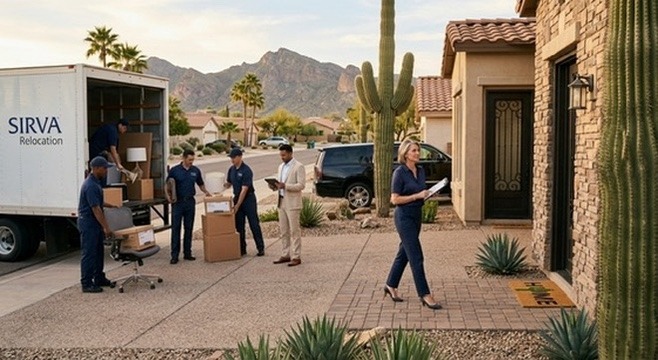
Being relocated to one of America’s fastest-growing metros is an opportunity. Arriving unprepared turns it into months of avoidable friction.
Phoenix is the fifth-largest city in the United States and one of the fastest-growing. It is the center of a semiconductor and advanced manufacturing boom, a hub for financial services and healthcare, and the most naturally connected American city to Mexico. For executives and families being relocated here, from Mexico, Latin America, Europe, or Asia, it offers enormous opportunity.
It also comes with a learning curve that most relocation packages do not adequately cover. This guide gives you the practical map.
Soft Landing in Arizona: The Documents That Open Every Door
In the United States, your ability to function in daily life, open a bank account, sign a lease, get a phone plan, establish credit, depends on a small set of foundational documents. Getting these right in the right sequence matters.
The sequence that works:
- Social Security Number (SSN) or Individual Taxpayer Identification Number (ITIN)
If your visa category allows you to work in the U.S., you are eligible for an SSN. If you are here as a dependent or on a non-work visa, you will need an ITIN for tax purposes. - Arizona Driver’s License or State ID
The Arizona MVD issues driver’s licenses to visa holders. Required: valid foreign passport, visa, I-94 arrival record, and proof of Arizona address. - U.S. Bank Account
Major banks, Chase, Bank of America, Wells Fargo, open accounts for foreign nationals with a valid passport, visa, and U.S. address. Krear prepares clients with the specific documentation each bank requires before the appointment. - U.S. Phone Number
Straightforward, but important to establish early because many U.S. services use phone number verification as their primary security factor.
Housing in the Phoenix Metro: Where to Live
Phoenix is a sprawling metro of over 4.8 million people across multiple cities and suburbs. Where you live shapes your commute, your children’s school options, and your daily quality of life.
Scottsdale, The most internationally connected part of the metro. Strong concentration of corporate offices, world-class restaurants, safety, and a well-established expat community. Higher cost of living, but the most frictionless soft landing environment.
Tempe / Chandler, Home to Arizona State University and a growing tech and semiconductor corridor. More affordable than Scottsdale, younger demographic, excellent infrastructure.
Gilbert / Mesa, Family-oriented, highly rated school districts, lower cost of living than Scottsdale. Practical choice for families prioritizing schools and space.
North Phoenix / Peoria, Newer construction, master-planned communities, suburban character. Popular with families from Latin America and Asia relocating for manufacturing or tech roles.
Schools: The Question That Drives Housing Decisions for Families
Arizona operates a mixed public-private school system with significant variation in quality by district. For international families, three categories are relevant:
International Baccalaureate (IB) schools: Several public and private schools in the metro offer the IB program, which provides international curriculum continuity for children who may return to their home country.
Bilingual and dual-language programs: Scottsdale Unified, Chandler Unified, and several charter networks offer Spanish-English dual language programs. Particularly valuable for Mexican and Latin American families maintaining Spanish fluency.
Private international schools: A small number of private schools in Scottsdale and North Phoenix cater specifically to international families, with multilingual faculty and culturally diverse student bodies.
Krear provides school mapping specific to your children’s ages, language needs, and your housing search area.
Healthcare: Getting It Right From Day One
The U.S. healthcare system is unlike any other. Understanding it before you need it saves money and stress.
- Employer-sponsored insurance is the standard for corporate relocations, understand your plan before you need it
- Primary care physician (PCP) selection matters: your PCP is your gateway to specialist referrals under most insurance plans
- Urgent care vs. emergency room: Urgent care centers are appropriate for non-life-threatening issues and cost a fraction of an ER visit
- Pharmacy system: Prescriptions require a U.S.-licensed physician. Medications you purchase over the counter in Mexico may require a prescription here
Krear maintains a referral list of Spanish-speaking physicians, dentists, and specialists in the Phoenix metro.
The First 90 Days: A Practical Checklist
Week 1
- ✓ SSN or ITIN application initiated
- ✓ Arizona driver’s license appointment scheduled
- ✓ U.S. bank account opened
- ✓ U.S. phone number established
- ✓ Children enrolled in school
Weeks 2-4
- ✓ Primary care physician selected and registered
- ✓ U.S. credit history started (secured credit card)
- ✓ Utilities established in your name
- ✓ Vehicle registered in Arizona (if applicable)
- ✓ U.S. health insurance card received and understood
Months 2-3
- ✓ ITIN or SSN confirmed
- ✓ U.S. credit card (unsecured) applied for
- ✓ Local professional network initiated
- ✓ Tax obligations for year of arrival understood
- ✓ Import of household goods completed (if applicable)
“The executives and families who arrive with this groundwork already mapped out spend their first months focused on their work and their new city. The ones who arrive without it spend their first months in waiting rooms, on hold with government offices, and redoing steps they did in the wrong order.”
Related reading:
Expanding Your Mexican Business to the U.S.: The 5 Decisions That Matter, The business structure and strategy questions that run alongside the personal relocation.
How to Open an LLC in the U.S. as a Mexican Entrepreneur, If your relocation includes setting up a U.S. business entity.
Formalizing Your Hispanic Business in Arizona, For those who have been operating in Arizona and need to bring their business into formal structure.
Request Your Personalized Arizona Soft Landing Package →
Krear Consultancy · Scottsdale, Arizona · Mexico City
Last reviewed: June 2026
Explore Our Services: Mexican Citizenship · Our Services · North American Market Entry · Workforce & Talent Relocation · Travel Advisory
Krear Consultancy
Ready to find your path?
Whether it is Mexican citizenship, U.S. business setup, or a cross-border move, your first consultation is free.
Book a Free Consultation